While budget parameters are typically the most visible and easily compared metric, final venue selection is frequently influenced by a broader set of factors – many of them subjective, situational, or shaped by incomplete information. In some cases, decisions are made based on familiarity, assumptions, or surface-level impressions rather than a structured assessment of what will most directly contribute to a successful event outcome.
From a venue provider’s perspective, the quality of any proposal is directly linked to the quality of the discovery process that precedes it. A comprehensive brief enables a venue to design a response that is genuinely aligned to the client’s objectives. Yet the depth and clarity of that brief can vary significantly depending on the event type, time pressures, and the seniority or experience of the client contact.
These variables make it challenging for both parties. Venue teams can feel they are responding to a “tick-the-box” exercise rather than a genuine evaluation, while clients may unknowingly compare proposals that are not truly comparable.
So, how can clients and event planners introduce a more consistent, client-focused framework for evaluating venue proposals?
One approach is to apply a shared set of objective considerations – criteria that go beyond price alone and allow competing proposals to be assessed more meaningfully, transparently, and fairly.
When applied honestly, such a framework increases the likelihood that the selected venue will not only look good on paper, but deliver effectively on the day and ultimately improve outcomes for everyone involved.
So, what might an objective set of considerations look like?

An Objective Set of Considerations for Evaluating Venue Proposals
(Hybrid Framework: Objective Criteria + Ask Yourself the Questions)
Tip: Not every consideration needs to carry equal weight. Some may be “non-negotiables,” others differentiators, and some simple sense-checks.
1. Alignment to Event Objectives (Non-Negotiable)
Objective criteria
- Demonstrated understanding of the purpose of the event
- Evidence that the proposal has been tailored (not templated)
Ask Yourself the Question:
Does this venue clearly understand why we are holding this event, not just what we are booking?
2. Suitability for Event Type & Format
Objective criteria
- Experience delivering similar business events, meetings, or workshops
- Appropriateness of room types, layouts, and adjacencies
Ask Yourself the Question:
Is this venue designed for the type of interaction, learning, or collaboration we’re aiming to achieve?
3. Capacity Fit (Not Just Maximum Numbers)
Objective criteria
- Comfortable capacity vs advertised maximum capacity
- Flexibility to scale up or down without compromise
Ask Yourself the Question:
Will this space feel right for our group size, or merely adequate?
4. Location & Accessibility
Objective criteria
- Proximity to transport, accommodation, and business districts
- Accessibility for all attendees
Ask Yourself the Question:
Does this location remove friction for our attendees or introduce it?

5. Quality of Physical Environment
Objective criteria
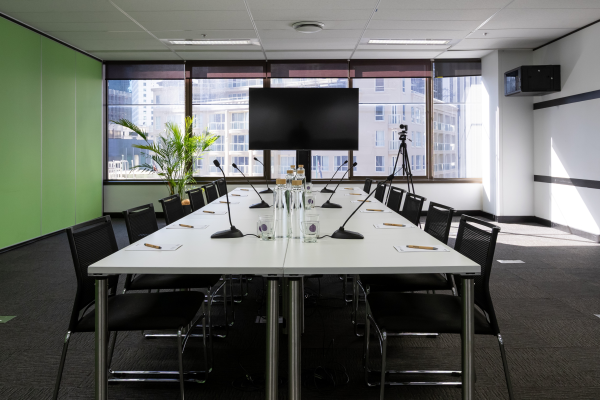
- Natural light, acoustics, air quality, temperature control
- Furniture quality and ergonomic suitability for longer sessions
Ask Yourself the Question:
Will this environment support energy, focus, and engagement throughout the day?
6. Technology Capability & Reliability
Objective criteria
- In-room AV standard inclusions vs chargeable extras
- On-site technical support and redundancy planning
Ask Yourself the Question:
Are we confident the technology will enable the event, not distract from it?
7. Service Model & On-the-Day Support
Objective criteria
- Dedicated event support vs shared or ad-hoc resourcing
- Clarity on roles and escalation points
Ask Yourself the Question:
Who is actually responsible for making sure this event runs smoothly on the day?
8. Experience & Delivery Credentials
Objective criteria
- Track record with similar clients or events
- Longevity and consistency of the delivery team
Ask Yourself the Question:
Is this venue promising a great experience or proven to deliver one?


9. Transparency of Pricing & Inclusions
Objective criteria
- Clear line-item pricing
- Explicit inclusions, exclusions, and assumptions
Ask Yourself the Question:
Are we comparing like-for-like, or are there hidden variables that may surface later?
10. Flexibility & Responsiveness
Objective criteria
- Willingness to adapt layouts, timings, or formats
- Speed and quality of communication during the proposal phase
Ask Yourself the Question:
How easy will this venue be to work with when things inevitably change?
11. Risk Management & Contingency Planning
Objective criteria
- Backup spaces, technology redundancy, staffing depth
- Clear processes for handling issues
Ask Yourself the Question:
If something goes wrong, are we confident this venue knows how to recover quickly?
12. Cultural & Brand Fit
Objective criteria
- Alignment with organisational values and professionalism
- Consistency between brand promise and behaviour
Ask Yourself the Question:
Does this venue feel like a natural extension of our organisation?

13. Consistency Between Proposal and Reality
Objective criteria
- Realism of commitments made
- Evidence that what is sold is what is delivered
Ask Yourself the Question:
Are we being sold an idealised version of the experience or an honest one?
14. Long-Term Partnership Potential (Optional)
Objective criteria
- Ability to support repeat or multi-location events
- Desire to build an ongoing relationship
Ask Yourself the Question:
Is this a one-off transaction, or a partner we’d be happy to work with again?
While no framework can remove all subjectivity from venue selection, applying a structured and transparent set of considerations helps ensure that decisions are based on what truly matters, not just what appears most competitive on paper.
Ultimately, the right venue is not the one that promises the most, but the one best positioned to deliver the experience your event requires.