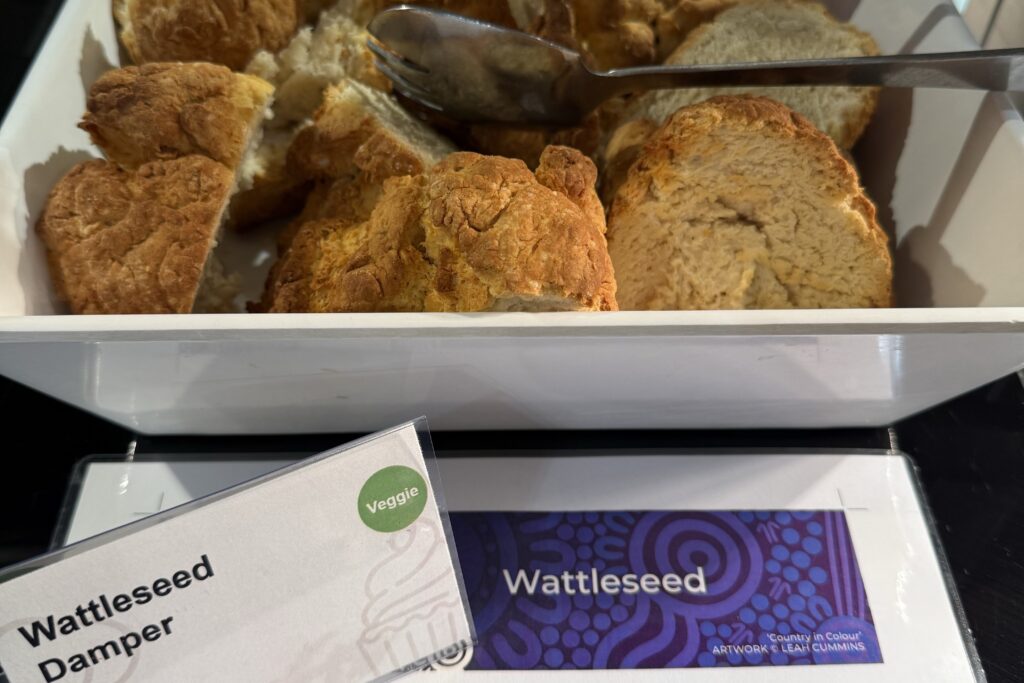
Harvested from selected species of Australia’s iconic wattle trees (Acacia), wattle seed has been a staple food for many Aboriginal communities for thousands of years. The seeds were traditionally collected by hand, carefully cleaned, then roasted over a fire before being ground into a fine flour using grinding stones. This flour was mixed with water to create dough, which could be cooked as a type of damper or flatbread.
Alongside wattle seed, Jiun incorporated several other native ingredients that each tell part of Australia’s story.
Native Ingredients with a Story
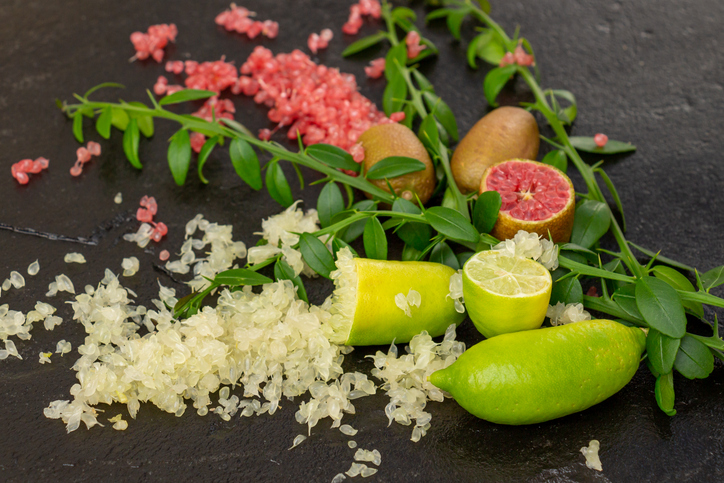
Lemon myrtle, often referred to as the “queen of the lemon herbs,” is native to the subtropical rainforests of eastern Australia. With its vibrant citrus aroma and naturally sweet lemon flavour, it has long been valued by First Nations peoples and has become one of the country’s most celebrated native herbs.
Finger lime, sometimes called “citrus caviar,” is another uniquely Australian ingredient, native to the rainforests of Queensland and northern New South Wales. It’s tiny pearl-like vesicles burst with bright citrus flavour, adding freshness and texture while showcasing the incredible diversity of Australia’s native produce.
Bush tomatoes, native to the arid regions of central Australia, have been harvested and used by Aboriginal communities for generations. Once dried, they develop a rich, savoury flavour with caramel and earthy notes, making them a distinctive ingredient that adds depth and complexity to modern Australian cooking.
Preserving the Flavours
For Jiun, the process began with research as he believes, “ food has a unique way of bringing people together. It tells stories, preserves traditions and creates opportunities to learn about cultures different from our own.”
The menu was designed not only to introduce guests to distinctive Australian flavours but also to encourage appreciation for the stories behind them.

The Challenge of Sourcing
Creating the menu came with its own challenges. “The biggest challenge was sourcing the ingredients,” Jiun says.
Many native Australian ingredients are produced on a much smaller scale than conventional produce, making them difficult and expensive to source.
Despite the challenges, Jiun believes the effort is worthwhile. Choosing to use these ingredients often requires additional planning and investment, but it also supports the continued growth and recognition of Australia’s native food industry.
More Than a Meal
“It’s important to respect the people of the First Nations, and incorporating their history into our daily meals is one way we can acknowledge that.”
Native Australian ingredients have a unique place in Australia’s story as they reflect tens of thousands of years of knowledge, sustainable practices and a deep connection to Country. By bringing these ingredients into today’s kitchens, we recognise this knowledge continues to shape Australia’s food culture.
Food also has a unique ability to spark meaningful conversations. “It can help start conversations about culture and history,” Jiun says. “You can share fun facts about what people used to eat and how they used to prepare their meals with the ingredients they had.”
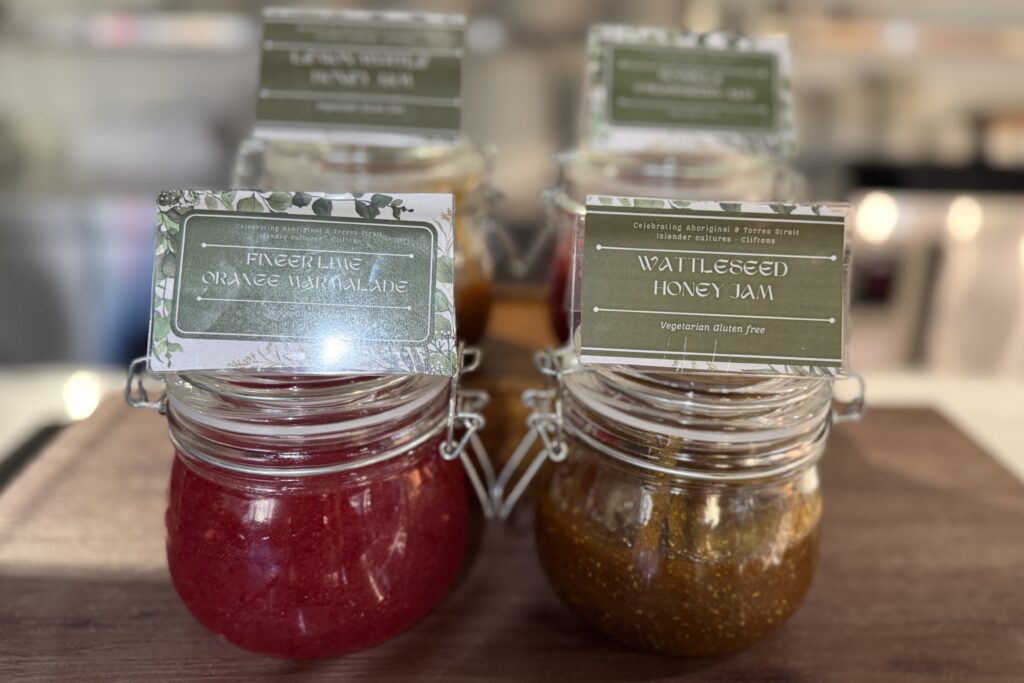
A Taste of Reconciliation
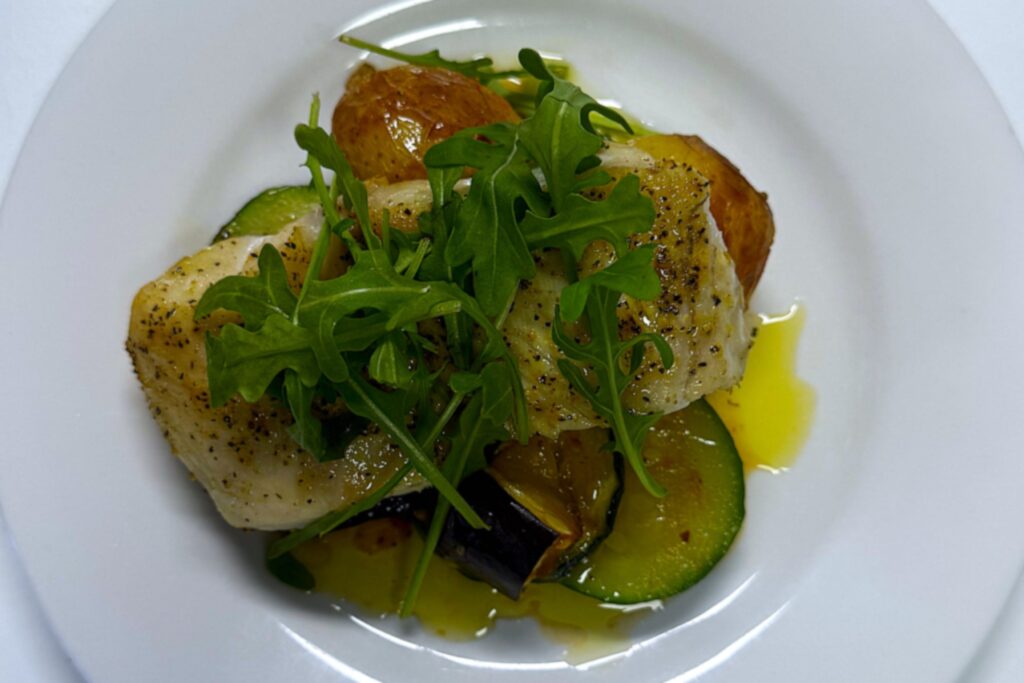
As guests experience flavours like roasted wattle seed, fragrant lemon myrtle, vibrant finger lime and earthy bush tomatoes, they’re tasting more than ingredients – they’re experiencing a small part of Australia’s living history. Cliftons’ ‘NAIDOC Week menu’ is a reminder that reconciliation can begin with curiosity. Curiosity to learn about our shared histories, cultures and achievements while reflecting on how each of us can contribute to reconciliation.
By recognising the stories behind the ingredients we use, and the people who have cared for this land for tens of thousands of years, we hope every dish encourages not only enjoyment, but also understanding, respect and meaningful conversation.
Discover how Cliftons’ catering can elevate your event with fresh, chef-crafted menus designed to bring people together. 🔗Contact our team.