
As organisations explore how AI can improve productivity, decision-making and customer experience, many are investing in workshops and training programs to build confidence and capability across their teams.
However, successful AI learning initiatives require more than just introducing new tools. They need clear objectives, relevant content, engaging delivery methods and an environment that supports learning. Whether you’re running a leadership briefing, a company-wide AI adoption program or hands-on skills training, careful planning can help maximise engagement and long-term impact.

Start with Clear Objectives
The most effective AI workshops begin with a clear understanding of what participants should achieve.
Common objectives include:
- Building foundational AI literacy across the organisation
- Increasing employee confidence in using AI tools
- Identifying practical business use cases
- Improving productivity through AI-assisted workflows
- Developing governance, risk and compliance awareness
- Supporting digital transformation initiatives
- Encouraging innovation and experimentation
Defining outcomes upfront helps shape the content, select the right facilitators and measure success after the event.
For example, an executive leadership team may require strategic insights into AI opportunities and risks, while frontline employees may benefit from practical demonstrations showing how AI can support their day-to-day work.
Segment Your Audience
One of the most common challenges with AI training is assuming everyone starts from the same level of understanding. AI workshops are often most successful when audiences are grouped according to their role, experience and learning needs.
Executives and Senior Leaders
Senior decision-makers typically need a strategic understanding of AI’s business implications. Sessions may focus on:
- Emerging trends and opportunities
- Risk management and governance
- Change management considerations
- Investment priorities
- Organisational readiness
Managers and Team Leaders
Managers often play a critical role in driving adoption and supporting teams through change.
Training may cover:
- Identifying suitable AI use cases
- Managing AI-enabled workflows
- Responsible use policies
- Supporting employee adoption


Employees and End Users
General employee training should focus on practical application and confidence-building.
Topics may include:
- Prompt writing techniques
- Everyday productivity use cases
- AI-assisted communication and content creation
- Data security considerations
- Best-practice workflows
Technical Teams
IT, data and development teams may require more specialised sessions covering:
- AI infrastructure
- Model selection
- Security and compliance
- Integration opportunities
- Advanced implementation strategies
Tailoring content to each audience group ensures sessions remain relevant and actionable.
Choose the Right Session Format
Different learning objectives require different formats. Combining multiple session styles can help reinforce learning and maintain engagement.
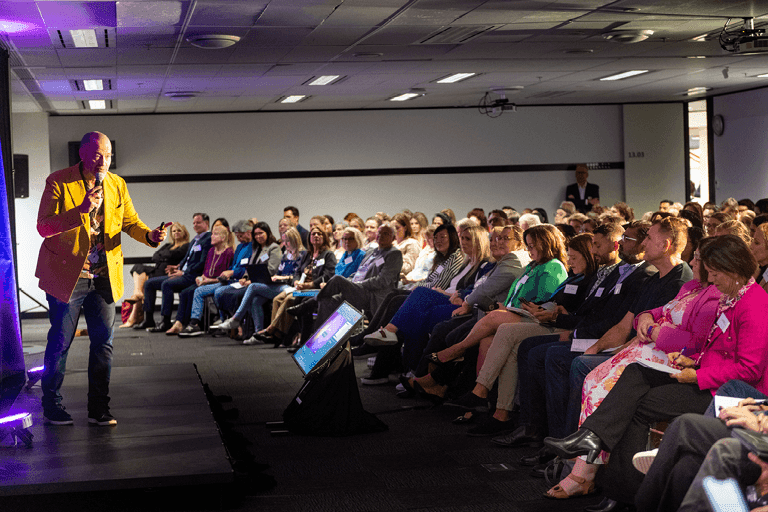
Keynote Presentations
Ideal for introducing AI concepts, sharing industry insights and building awareness across larger audiences.
Benefits include:
- Consistent messaging
- High-level strategic context
- Large audience reach
Interactive Workshops
Workshops encourage participants to apply concepts in real time through practical exercises, group discussions and problem-solving activities.
These sessions are particularly effective for:
- Exploring use cases
- Building confidence
- Encouraging collaboration
- Developing implementation plans

Hands-On Training Sessions
Practical sessions allow participants to work directly with AI tools.
Activities may include:
- Prompt engineering exercises
- Content generation tasks
- Workflow optimisation demonstrations
- Scenario-based learning
Hands-on experiences often accelerate learning by helping participants see immediate value from AI technologies.
Panel Discussions and Q&A Sessions
Many employees have questions about AI’s impact on their roles and responsibilities.
Panel discussions can address concerns around:
- Job augmentation versus automation
- Ethical considerations
- Industry applications
- Organisational strategy
These sessions help build transparency and trust.
Create an Environment That Supports Learning
The venue plays an important role in the success of AI-focused learning events. Participants need spaces that encourage interaction, collaboration and technology-enabled learning.
When selecting a venue, consider:
Flexible Room Configurations
Different activities may require different room layouts throughout the day.
For example:
- Theatre style for keynote presentations
- Classroom layouts for skills training
- Cabaret seating for collaborative workshops
- Breakout spaces for small-group activities
Flexible environments support varied learning experiences and help maintain engagement.
Reliable Technology
AI workshops often rely heavily on technology.
Ensure your venue offers:
- High-speed internet connectivity
- Reliable audiovisual equipment
- Multiple display screens
- Power access for participants
- Technical support on-site
Technology issues can quickly disrupt momentum and reduce the effectiveness of training sessions.
Dedicated Breakout Areas
Some of the most valuable conversations happen outside the main training room.
Breakout spaces provide opportunities for:
- Peer learning
- Group exercises
- Networking
- Informal discussion
These interactions often help participants contextualise new concepts within their own roles and teams.


Supporting AI Adoption at Scale
For organisations introducing AI across multiple teams or locations, workshops should be viewed as part of a broader change management strategy rather than a one-off event.
Consider taking a phased approach:
Phase 1: Awareness
Introduce employees to AI concepts, opportunities and organisational goals.
Phase 2: Enablement
Provide practical training focused on role-specific use cases and workflows.
Phase 3: Adoption
Support ongoing application through coaching, resources and communities of practice.
Phase 4: Optimisation
Measure outcomes, share success stories and identify opportunities for continuous improvement.
Organisations that combine training with ongoing support are more likely to achieve sustainable adoption and meaningful business results.
Turning AI Knowledge into Action
As AI becomes increasingly embedded in the workplace, effective training programs are essential for building confidence, capability and organisational readiness. By defining clear objectives, tailoring content to different audiences, choosing engaging formats and creating the right learning environment, organisations can help employees move from curiosity to practical application.
Whether you’re introducing AI fundamentals, exploring strategic opportunities or equipping teams with hands-on skills, a well-designed workshop can provide the foundation for successful AI adoption across your organisation. 🔗Contact our team.