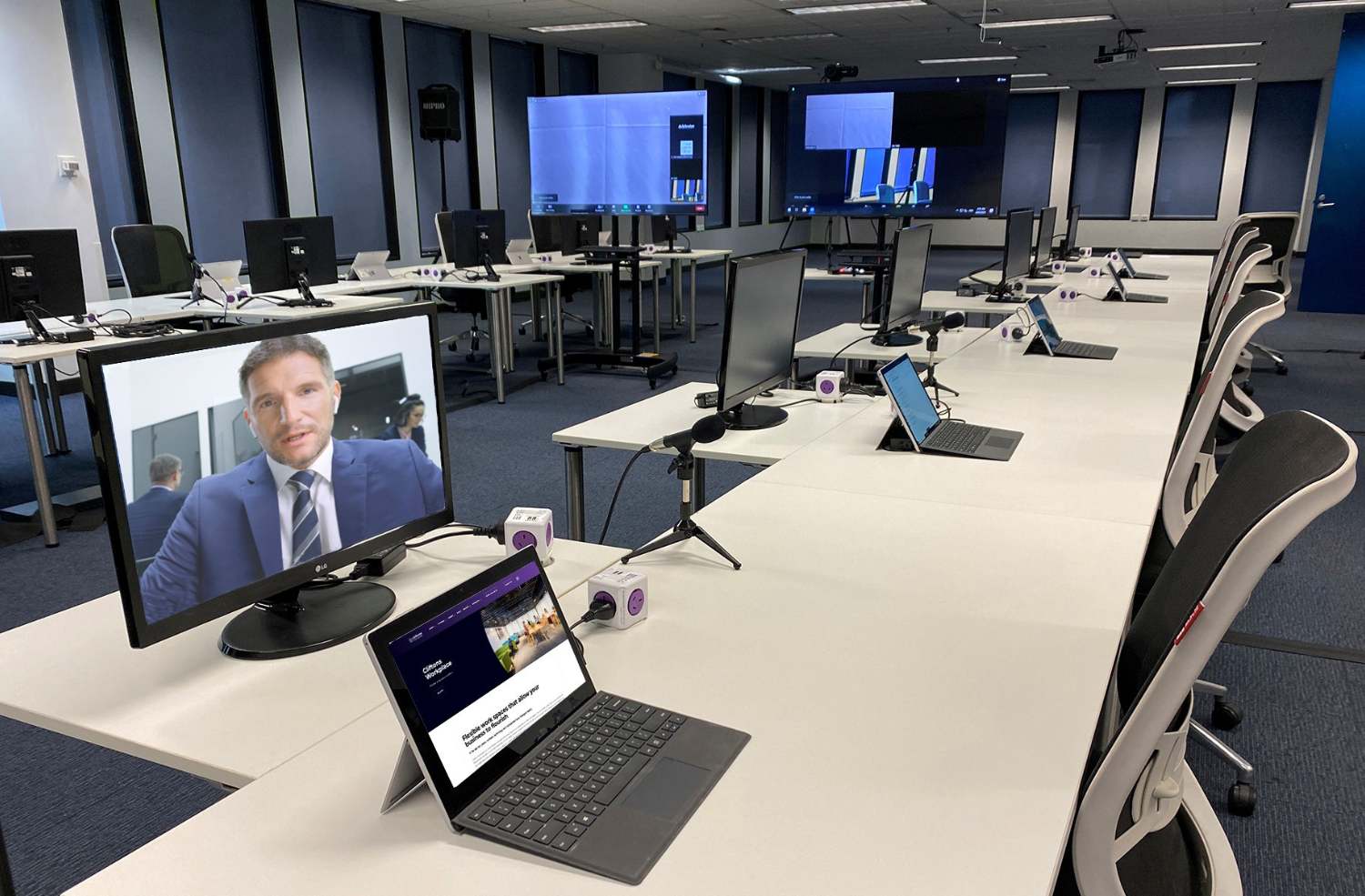
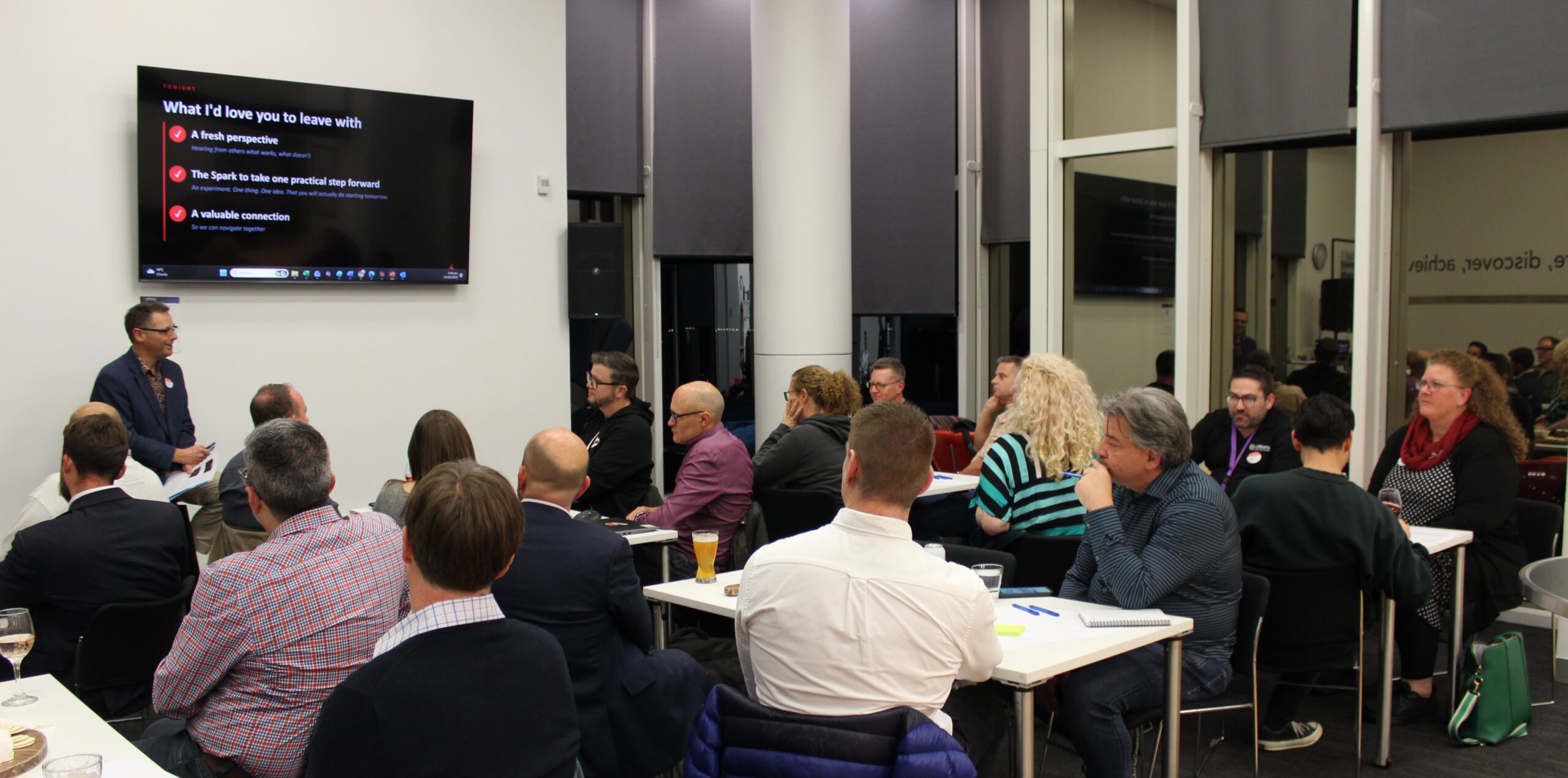
The recent Cleanaway Sales Academy rollout is a strong example of how a well-executed hybrid approach can overcome these barriers and drive meaningful learning outcomes at scale.
Read the full case study: 🔗Cleanaway Sales Academy
The Challenge of National Training at Scale
For organisations with distributed teams, traditional face-to-face training can quickly become costly, time-intensive, and inconsistent. On the other hand, fully virtual training often struggles to maintain engagement and connection.
Cleanaway needed to strike the right balance:
- Deliver a unified training experience nationwide
- Maintain engagement and collaboration across locations
- Ensure consistency in delivery, regardless of venue or facilitator
- Navigate scheduling and time zone complexities
These challenges are not unique. Many organisations encounter the same tension between scale, quality, and connection when rolling out national learning programs.
Why Hybrid Was the Right Approach
Hybrid learning has evolved far beyond simply dialling into a video call. When designed properly, it allows organisations to combine the strengths of in-person and virtual delivery.
In this case, the program leveraged a connected multi-city model, enabling:
- Simultaneous participation across locations
- Shared learning moments for alignment and consistency
- Local breakout sessions tailored to each group
- Real-time collaboration between cities
This approach ensured that participants weren’t just consuming content, they were actively engaging with it, while still feeling part of a broader national cohort.
Designing for Consistency Across Locations
One of the biggest risks in multi-site training is inconsistency. Different venues, facilitators, and technical setups can lead to varied participant experiences.
To address this, the program focused on standardisation:
- Identical room configurations across cities
- Aligned session formats and facilitation styles
- Integrated technology designed specifically for hybrid delivery
- On-site technical support to maintain quality throughout
This level of consistency is critical. It ensures that every participant, whether in Sydney, Melbourne, Brisbane, or Adelaide, receives the same value from the program.
The Role of Technology (When It’s Done Right)
Technology can make or break hybrid training.
Rather than treating it as an add-on, the technology in this program was embedded into the experience itself:
- Seamless live streaming between locations
- Clear audio-visual integration for two-way participation
- Reliable connectivity supported by on-site expertise
Most importantly, the technology didn’t distract from the learning, it enabled it.
Engagement Beyond the Classroom
Training doesn’t stop when the session ends.
An often-overlooked element of national programs is the opportunity to build relationships across teams. In this rollout, structured networking opportunities, such as post-session drinks, created space for informal connection.
This had a dual benefit:
- Strengthened collaboration within local teams
- Reinforced a sense of belonging to a national network
These moments can significantly enhance the overall impact of training programs.
Flexibility as a Success Factor
No large-scale program runs exactly as planned. Attendance shifts, schedules change, and business priorities evolve.
A key success factor in this rollout was the ability to remain flexible:
- Adjusting session delivery across cities
- Accommodating varying attendance levels
- Adapting to time zone differences
This adaptability ensured the program remained effective without compromising quality.
What Organisations Can Learn
There are several practical takeaways from this approach:
1. Design hybrid intentionally
Hybrid is not a compromise, it should be a deliberate strategy that enhances both in-person and virtual experiences.
2. Prioritise consistency
Standardised environments and delivery models are essential for maintaining quality at scale.
3. Invest in the right support
Technology alone isn’t enough, experienced on-site support ensures everything runs smoothly.
4. Create shared experiences
Connecting participants across locations builds alignment and fosters a stronger organisational culture.
5. Build in flexibility
Programs that can adapt to real-world conditions are far more likely to succeed.

A Model for Future Training Programs
As organisations continue to operate across distributed teams, the demand for scalable, engaging training will only increase.
This case demonstrates that with the right combination of strategy, technology, and delivery expertise, hybrid learning can deliver:
- National consistency
- Strong engagement
- Operational efficiency
- Meaningful learning outcomes
It’s not just about reaching more people, it’s about delivering the same high-quality experience to everyone, no matter where they are.
Planning a multi-location training rollout and want it to run smoothly from start to finish? 🔗Contact our team.